Neurofeedback for Depression (MDD) in Austin
Major Depressive Disorder is one of the most common mental health struggles in the world, affecting more than 21 million adults in the United States every year.
If you are living with depression, you already know how exhausting this mental disorder can be, with persistent low mood, fatigue, and a loss of interest in the things that once brought you joy. Many individuals are left with few options for how to manage their symptoms, often cycling through medications that only partially work or carry unwanted side effects.
At North Austin Neurofeedback, we combine compassion, neuroscience, and evidence-based technology to support healing at the root level, helping you move from survival mode to clarity, stability, and a renewed sense of self. Neurofeedback for depression offers a gentle, non-invasive way to help your brain recover by teaching it how to regulate itself from the inside out.

What is Depression?

Major Depressive Disorder (MDD) is a mood disorder causing persistent symptoms that impact daily routines, work or school performance, and personal relationships.
According to the DSM-5 diagnostic criteria for depression, clinicians look for:
Persistent low mood
Fatigue and low energy
Rumination and worry
Brain fog and poor focus
Sleep disruption (insomnia or hypersomnia)
Weight gain or loss
Thoughts of death or suicide
Low self-esteem
Feelings of hopelessness, sadness, or guilt
Isolation or withdrawal
Lack of motivation or drive
Slower speech and movements
North Austin Neurofeedback offers qEEG-guided neurofeedback therapy, a clinically informed, personalized approach grounded in decades of brain science, for residents of Austin, Round Rock, Pflugerville, Georgetown, Cedar Park, and Leander, TX.
Types of Depression
Major Depressive Disorder (MDD) — the most common and formally diagnosed form of clinical depression
Persistent Depressive Disorder (PDD / Dysthymia) — a chronic, lower-grade depression lasting two or more years that often goes undiagnosed
Seasonal Affective Disorder (SAD) — recurrent depressive episodes tied to seasonal light changes
Postpartum Depression (PPD) — depression occurring after childbirth, affecting mood, energy, and bonding
Situational Depression (Adjustment Disorder with Depressed Mood) — triggered by a specific life stressor such as grief, job loss, or divorce
Medication-Resistant MDD — partial or no response to one or more antidepressant trials
Bipolar Depression — the depressive phase of bipolar disorder; neurofeedback is used here as a complementary tool alongside psychiatric care, not as a standalone treatment

What does the research say about Neurofeedback for Depression?
Neurofeedback for Depression is supported by a growing body of peer-reviewed clinical research, including systematic reviews and meta-analyses published in leading medical journals. While the field continues to evolve, current evidence consistently points to meaningful reductions in depressive symptoms through targeted brainwave training.
21M
U.S. adults experience at least one major depressive episode per year (NIMH, 2023)
30%
of MDD patients do not fully respond to antidepressant medication alone
2022
meta-analysis in Psychological Medicine confirmed significant depression improvement with neurofeedback
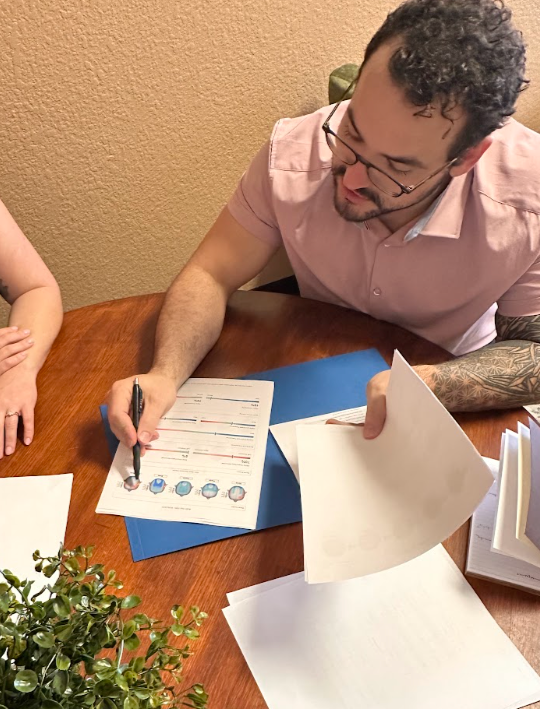
Fernández-Alvarez, J., Grassi, M., Colombo, D., Botella, C., Cipresso, P., Perna, G., & Riva, G. (2022). Efficacy of bio- and neurofeedback for depression: a meta-analysis. Psychological medicine, 52(2), 201–216.
doi.org/10.1017/S0033291721004396
Misaki, M., Young, K., Tsuchiyagaito, A., Savitz, J., & Guinjoan, S. M. (2024). Clinical Response to Neurofeedback in Major Depression Relates to Subtypes of Whole-Brain Activation Patterns During Training. bioRxiv : the preprint server for biology, 2024.05.01.592108. doi.org/10.1101/2024.05.01.592108
Wang, S., Lin, I., Wu, C., Tsai, Y., Hsu, A., & Cheng, C. (2019). Effects of alpha asymmetry and high-beta down-training neurofeedback for patients with comorbid major depressive disorder and anxiety symptoms. Journal of Affective Disorders, 257, 287–296.
doi: 10.1016/j.jad.2019.07.026
de Souza Dobbins, R., Rodrigues, A., & Brunoni, A. (2023). Effects of neurofeedback on major depressive disorder: a systematic review. Einstein (São Paulo), 21, eRW0253.
doi: 10.31744/einstein_journal/2023RW0253
Choi, S. W., Chi, S. E., Chung, S. Y., Kim, J. W., Ahn, C. Y., & Kim, H. T. (2011). Is alpha wave neurofeedback effective with randomized clinical trials in depression? A pilot study. Neuropsychobiology, 63(1), 43–51.
doi: 10.1159/000322290
Neurofeedback + Psychotherapy

Brainwave training is most powerful when combined with evidence-based psychotherapy. Our Clinical Director, Gil Garza, LMSW, LCDC, integrates multiple therapeutic modalities to address the cognitive, emotional, and behavioral dimensions of depression.
→Cognitive Behavioral Therapy (CBT) — Restructures negative thought patterns driving depressive episodes.
→Dialectical Behavior Therapy (DBT) — Builds emotional regulation, distress tolerance, and interpersonal effectiveness.
→EMDR — Addresses trauma-based depression and helps reprocess painful memories contributing to chronic low mood.
→Narrative & Existential Therapy — Explores identity, meaning, and purpose — foundational to long-term recovery from depression.
Why choose us on your Neurofeedback journey?
BCIA Board Certified in Neurofeedback
🧠
Licensed Master Social Worker (LMSW)
Our Clinical Director is certified by the Biofeedback Certification International Alliance (BCIA) — the gold standard credentialing body for neurofeedback practitioners. Requires supervised hours, written examination, and ongoing continuing education.Licensed by the Texas State Board of Social Worker Examiners. Our Clinical Director's dual licensure in social work and neurofeedback ensures care that addresses both the neurological and relational dimensions of trauma recovery.When it comes to your brain health and healing, credentials matter. Our Clinical Director maintains advanced training, full licensure, and strict ethical standards in neurofeedback therapy. Every member of our team is BrainCore certified, ensuring consistent, evidence-based brain training services.
As a trusted provider of neurofeedback therapy in Austin, TX, we deliver personalized treatment plans tailored to your specific goals — whether you're seeking support for focus, anxiety, sleep, mood, or cognitive performance. We are committed to compassionate care, measurable results, and making high-quality neurofeedback accessible with some of the most competitive pricing in the Austin area. Non-Medication Depression Treatment in Austin.
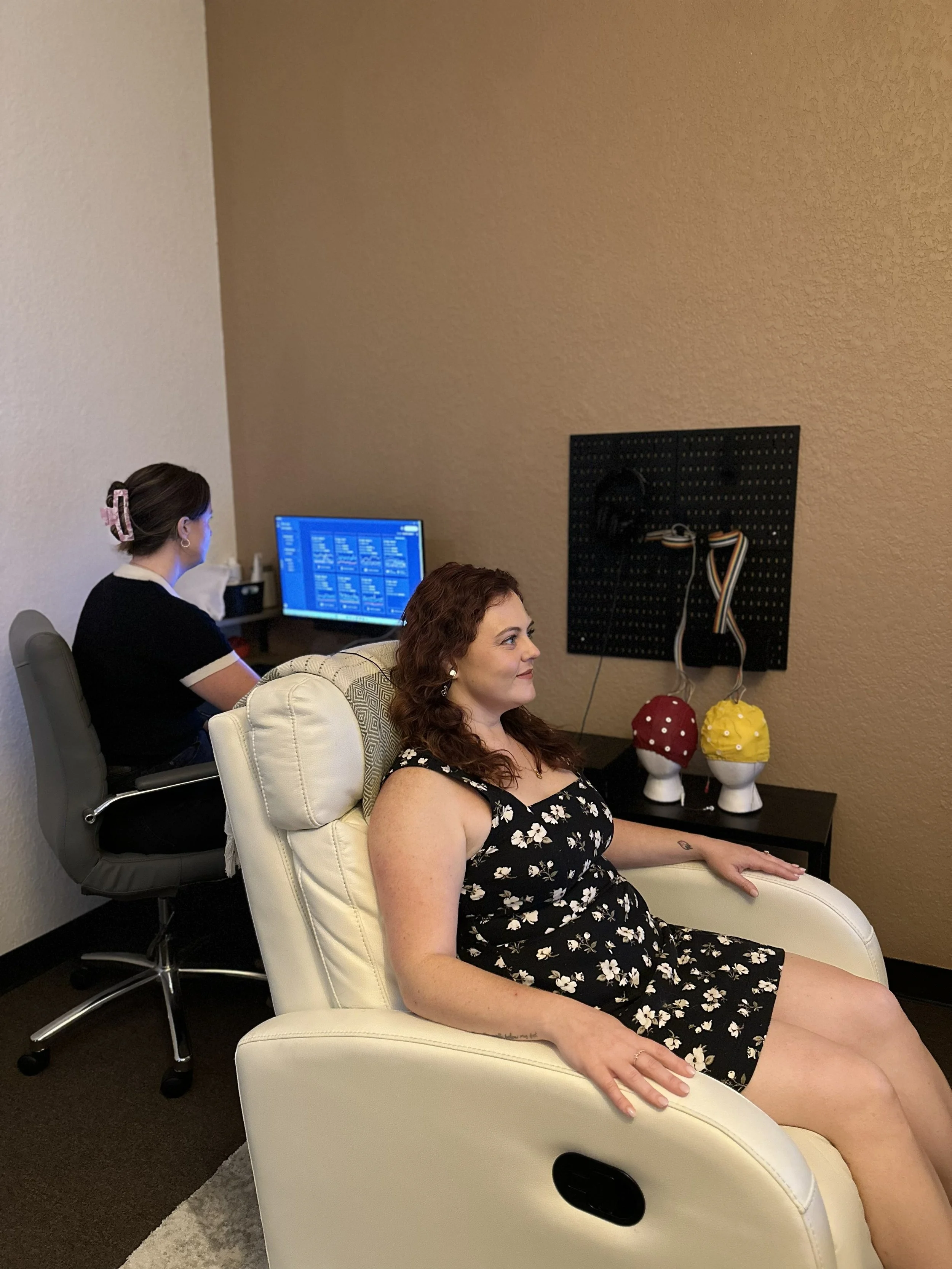
Our process for neurofeedback for depression in Austin, TX

01
Consultation Call
We start with a free consultation to understand your history, symptoms, and goals. There's no pressure and no commitment. We want to make sure neurofeedback is the right fit for you before we begin.
02
QEEG Scan
We conduct a comprehensive quantitative EEG brain map. This is completely non-invasive and painless — you simply sit comfortably while sensors read your brain's electrical activity. We use this data to build your personalized protocol.
03
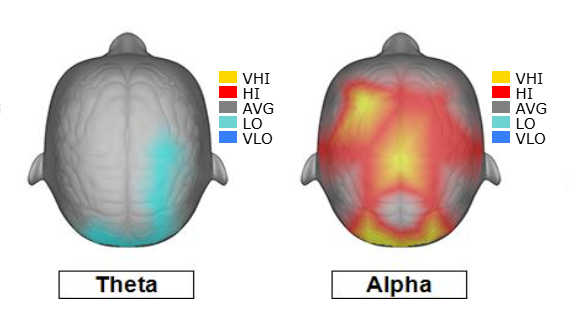
Report of Findings
After your QEEG our licensed provider will provide an overview of what the brain map shows and what neurofeedback protocols we believe would be best suited for your brain. A QEEG is not used for diagnosis but rather it aids in our understanding of your brains electrical activity.

04
Neurofeedback
Your journey begins by sitting comfortably in front of a Netflix screen while EEG electrodes monitor your brain activity. As you watch, the system provides real-time audio-visual feedback whenever your brain enters a more regulated state.
Common Questions about Neurofeedback for Depression in Austin
-
Neurofeedback is a non-invasive brain training technique that uses real-time EEG feedback to help the brain self-regulate dysregulated brainwave patterns linked to depression. At North Austin Neurofeedback, we begin with a QEEG brain map to identify your unique patterns, then design a personalized training protocol to guide your brain toward healthier activity — all without medication.
-
A growing body of peer-reviewed research supports neurofeedback as an effective complementary or standalone approach for MDD. A 2022 meta-analysis in Psychological Medicine found significant improvements in depressive symptoms following neurofeedback. Multiple studies confirm that frontal alpha asymmetry training — targeting the left prefrontal underactivation common in depression — produces clinically meaningful reductions in depressive symptoms and improved cognitive function.
-
Most clients see meaningful improvement within 20–40 sessions, typically scheduled 2–3 times per week. Each protocol is adjusted regularly based on symptom tracking and QEEG re-assessments. Our clinical director conducts a complimentary case management check-in every five sessions to monitor your progress and optimize your plan.
-
Yes. Neurofeedback is safe to use alongside medication, therapy, or other treatments. Many clients use it to enhance existing treatments or as a long-term pathway toward reducing medication dependency — always under the supervision of their prescribing physician. We never advise clients to alter psychiatric medications without their doctor's guidance.
-
Not at all. Neurofeedback is entirely non-invasive. Small sensors are placed on your scalp to read brainwave activity — nothing penetrates the skin. The sessions are typically relaxing; many clients listen to music or watch a visual display during training.
-
We combine licensed clinical oversight (LMSW, LCDC), BrainCore Neurofeedback certification, and full psychotherapy modalities (CBT, DBT, EMDR) under one roof. Every plan starts with an individual QEEG brain map — not a generic algorithm. Our Clinical Director personally supervises ongoing case management, ensuring your protocol evolves with your progress.
Gil Garza, LMSW, LCDC, BCN, is a Licensed Master Social Worker, Licensed Chemical Dependency Counselor, and Board-Certified Neurofeedback Clinician through the Biofeedback Certification International Alliance (BCIA). He specializes in QEEG brain mapping, neurofeedback therapy, trauma-informed care, and behavioral interventions for adolescents and adults. Gil has extensive experience in dual-diagnosis treatment within inpatient and intensive outpatient (IOP) settings, supporting individuals with substance use disorders, ADHD, learning differences, developmental delays, and trauma-related conditions. He is also trained in EMDR therapy and integrates evidence-based behavioral health approaches with brain-based interventions to help clients improve emotional regulation, attention, and cognitive functioning.