


Neurofeedback for Trauma & Post-Traumatic Stress Disorder (PTSD)
At North Austin Neurofeedback, we combine compassion, neuroscience, and evidence-based technology to support healing at the root level — helping you move from survival mode to stability and growth.
Complex PTSD often develops after prolonged or repeated trauma — leaving the nervous system stuck in patterns of hypervigilance, emotional flooding, or numbness. Neurofeedback offers a gentle, non-invasive way to help your brain recover from these patterns by teaching it how to regulate itself.
Through real-time brainwave training, neurofeedback helps calm overactive stress responses, improve sleep, reduce intrusive thoughts, and restore a sense of internal safety. Clients often describe feeling clearer, more centered, and better able to engage in daily life — and in therapy — without becoming overwhelmed.
What Is Trauma?
Trauma Isn't Just a Memory — It's Stored in the Brain
Post-Traumatic Stress Disorder (PTSD) is not a sign of weakness. It's a neurological response to overwhelming experiences that the brain couldn't fully process at the time. As a result, the brain becomes stuck in a state of threat — even long after the danger has passed.
Research shows that trauma dysregulates key brain regions: the amygdala (your brain's alarm system) becomes overactive, while the prefrontal cortex — responsible for rational thinking and emotional regulation — becomes underactive. This creates the cycle of hypervigilance, avoidance, intrusive memories, and emotional flooding that defines post-traumatic stress disorder (PTSD).
Because trauma affects each person differently, there is no one-size-fits-all path to healing. That's why our neurofeedback therapy for PTSD takes a personalized, brain-based approach — one that addresses the unique ways trauma reshapes neural pathways and disrupts everyday functioning.
Common PTSD & Trauma Symptoms:
Intrusive thoughts
Anxiety & Panic Attacks
Nightmares & Sleep issues
Hypervigilance & Startle
Emotional numbness
Avoidance of trauma reminders
Irritability & anger outbursts
Difficulty concentrating
"Existing treatments for PTSD — including prolonged exposure, cognitive processing therapy, and EMDR — are only partially effective. Nonresponse rates reach up to 72% in some populations, prompting researchers to evaluate alternative treatments such as neurofeedback."
-Berman et al., Frontiers in Neuroscience, 2025
Who Experiences PTSD?
Trauma Affects More People Than You Think

Post-traumatic stress disorder (PTSD) affects millions of people across all walks of life. Here at our clinic, we see ages 6+, which includes children and teenagers, working adults, and seniors. Trauma occurs when an experience overwhelms the nervous system's ability to cope, and it can stem from a variety of sources:
Combat & military service
Sexual assault or abuse
Childhood neglect or adverse experiences
Domestic violence
Accidents, injuries & medical trauma
First responder & emergency worker experiences
Loss, grief & sudden bereavement
Complex PTSD (C-PTSD) from prolonged trauma
What does the research say about Neurofeedback for PTSD?
Neurofeedback for PTSD is backed by a growing body of peer-reviewed clinical research, including randomized controlled trials and systematic reviews published in leading medical journals.
60%+
of participants no longer met diagnostic criteria for PTSD after neurofeedback treatment in one clinical study
72%
nonresponse rate for standard PTSD psychotherapy in some populations — shows importance of other interventions
2024
systematic review and meta-analysis in Frontiers in Psychiatry confirmed neurofeedback's beneficial effects on PTSD symptom reduction
Voigt, Mosier & Tendler (2024). Systematic review and meta-analysis of neurofeedback and its effect on posttraumatic stress disorder. Frontiers in Psychiatry, 15, 1323485.
doi: 10.3389/fpsyt.2024.1323485 ↗
Berman et al. (2025). Systematic review and meta-analysis of neurofeedback training efficacy and neural mechanisms in the treatment of posttraumatic stress disorder. Frontiers in Neuroscience.
doi: 10.3389/fnins.2025.1658652 ↗
Askovic et al. (2023). Neurofeedback for post-traumatic stress disorder: systematic review and meta-analysis of clinical and neurophysiological outcomes. European Journal of Psychotraumatology, 14, 2257435.
doi: 10.1080/20008066.2023.2257435 ↗
van der Kolk et al. (2016). A randomized controlled study of neurofeedback for chronic PTSD. PLOS ONE, 11(12), e0166752.
doi: 10.1371/journal.pone.0166752 ↗
Reiter, Andersen & Carlsson (2016). Neurofeedback treatment and posttraumatic stress disorder: effectiveness of neurofeedback on posttraumatic stress disorder and the optimal choice of protocol. Journal of Nervous and Mental Disease, 204(2), 69–77.
doi: 10.1097/NMD.0000000000000418 ↗
Alpha/Theta Neurofeedback with EMDR
Trauma Therapy Program
At North Austin Neurofeedback, we offer a specialized trauma therapy program that combines Alpha/Theta neurofeedback training with EMDR (Eye Movement Desensitization and Reprocessing). This integrative approach helps clients safely process traumatic memories, regulate emotional responses, and support long-term healing.
Alpha/Theta neurofeedback, also called hypnagogic training, is an eyes-closed brain training protocol that helps the brain enter a deeply relaxed state associated with memory processing, emotional integration, and subconscious access. These brainwave states allow unresolved experiences to surface in a safe and controlled therapeutic environment.
EMDR therapy is a well-researched treatment for trauma and PTSD that uses bilateral stimulation, such as guided eye movements, while a person focuses on a specific memory. This process helps the brain reprocess traumatic experiences, so they become less emotionally overwhelming.
By combining Alpha/Theta neurofeedback with EMDR, clients can access deeper brain states that support trauma processing while also using structured techniques to integrate difficult memories.
Why choose us on your Neurofeedback journey?
BCIA Board Certified in Neurofeedback
🧠
📚
Licensed Master Social Worker (LMSW)
Our Clinical Director is certified by the Biofeedback Certification International Alliance (BCIA) — the gold standard credentialing body for neurofeedback practitioners. Requires supervised hours, written examination, and ongoing continuing education.Licensed by the Texas State Board of Social Worker Examiners. Our Clinical Director's dual licensure in social work and neurofeedback ensures care that addresses both the neurological and relational dimensions of trauma recovery.When it comes to your brain health and healing, credentials matter. Our Clinical Director maintains advanced training, full licensure, and strict ethical standards in neurofeedback therapy. Every member of our team is BrainCore certified, ensuring consistent, evidence-based brain training services.
As a trusted provider of neurofeedback therapy in Austin, TX, we deliver personalized treatment plans tailored to your specific goals — whether you're seeking support for focus, anxiety, sleep, mood, or cognitive performance. We are committed to compassionate care, measurable results, and making high-quality neurofeedback accessible with some of the most competitive pricing in the Austin area.
Our process for neurofeedback for post-traumatic stress disorder in Austin, TX

01
Consultation Call
We start with a free consultation to understand your history, symptoms, and goals. There's no pressure and no commitment. We want to make sure neurofeedback is the right fit for you before we begin.
02
QEEG Scan
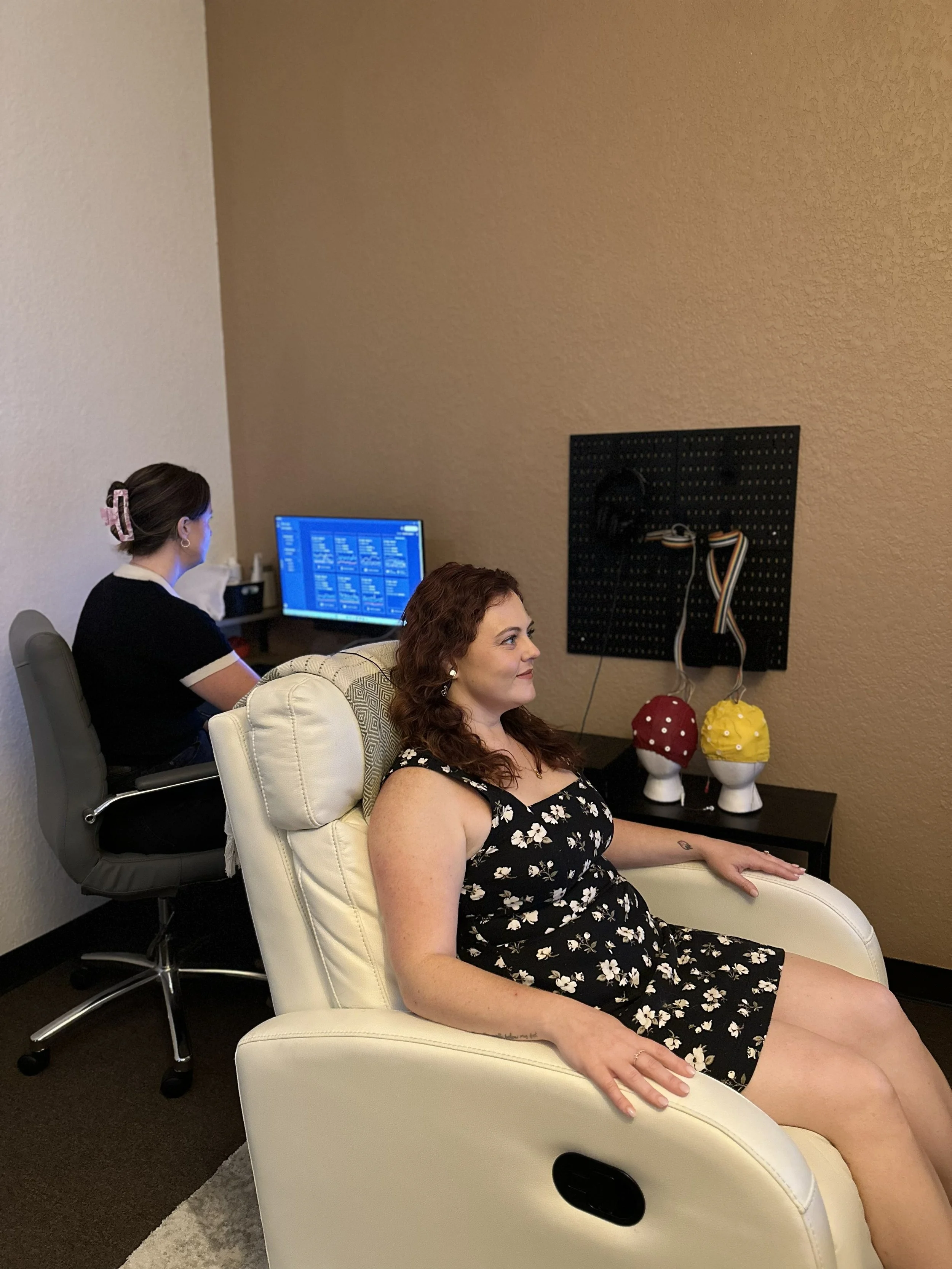
We conduct a comprehensive quantitative EEG brain map. This is completely non-invasive and painless — you simply sit comfortably while sensors read your brain's electrical activity. We use this data to build your personalized protocol.
03
Report of Findings
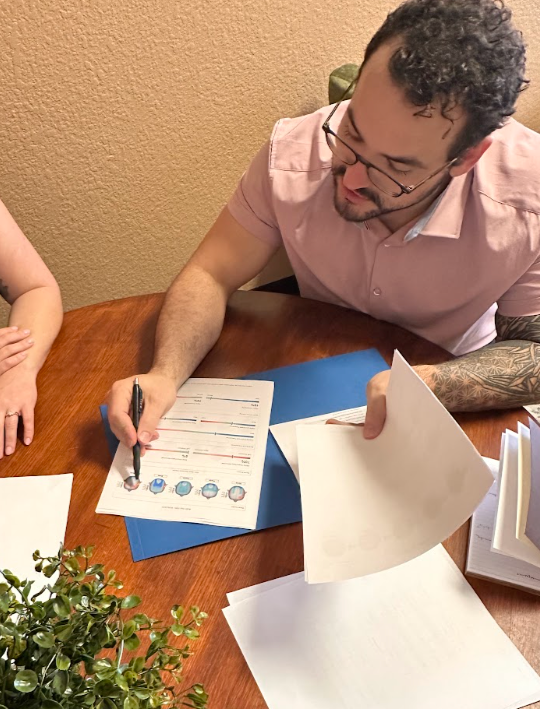
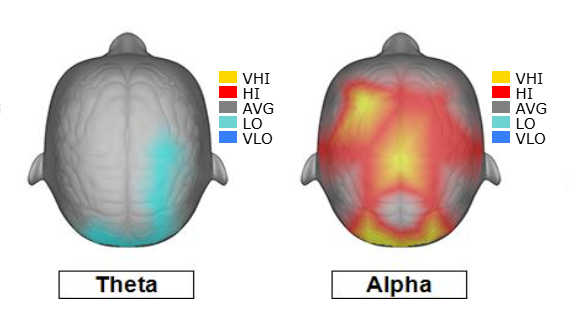
After your QEEG our licensed provider will provide an overview of what the brain map shows and what neurofeedback protocols we believe would be best suited for your brain. A QEEG is not used for diagnosis but rather it aids in our understanding of your brains electrical activity.

04
Neurofeedback
Your journey begins by sitting comfortably in front of a Netflix screen while EEG electrodes monitor your brain activity. As you watch, the system provides real-time audio-visual feedback whenever your brain enters a more regulated state.
Gil Garza, LMSW, LCDC, BCN, is a Licensed Master Social Worker, Licensed Chemical Dependency Counselor, and Board-Certified Neurofeedback Clinician through the Biofeedback Certification International Alliance (BCIA). He specializes in QEEG brain mapping, neurofeedback therapy, trauma-informed care, and behavioral interventions for adolescents and adults. Gil has extensive experience in dual-diagnosis treatment within inpatient and intensive outpatient (IOP) settings, supporting individuals with substance use disorders, ADHD, learning differences, developmental delays, and trauma-related conditions. He is also trained in EMDR therapy and integrates evidence-based behavioral health approaches with brain-based interventions to help clients improve emotional regulation, attention, and cognitive functioning.

Common Questions about Neurofeedback for PTSD in Austin
-
Neurofeedback is a non-invasive, drug-free brain training technique that uses real-time EEG feedback to help your brain learn to self-regulate. For PTSD, it targets the overactive amygdala and dysregulated prefrontal cortex patterns associated with trauma responses — helping reduce hypervigilance, flashbacks, and emotional dysregulation at their neurological source.
-
Most clients begin noticing meaningful changes between sessions 10 and 20. A full course of neurofeedback for trauma typically involves 20–40 sessions, though this varies significantly based on trauma history, severity, and individual brain patterns. We create a personalized treatment plan after your initial qEEG brain map and re-evaluate progress regularly.
-
Yes. Neurofeedback is considered safe and non-invasive. The EEG sensors only read your brain's electrical activity — they do not send any electrical signals into your brain. There is no medication, no needles, and no requirement to verbally recount your trauma. It is well-tolerated across diverse populations including veterans, children, and survivors of complex trauma. Our BCIA-certified Clinical Director conducts a thorough intake before beginning any protocol.
-
Coverage varies by insurer and plan. Some providers reimburse neurofeedback under mental health or biofeedback CPT codes. We recommend contacting your insurance company to ask about biofeedback/neurofeedback coverage, and we are happy to provide documentation to support your reimbursement request. We also offer self-pay options and can discuss payment flexibility during your free consultation.
-
No. Neurofeedback is frequently used alongside other therapeutic modalities and does not require discontinuing medication or therapy. In fact, many clients find that neurofeedback enhances the effectiveness of their existing treatment. We always recommend collaborating with your full care team.
-
Talk therapy works at the cognitive level — helping you process and reframe traumatic experiences through language and thought. Neurofeedback works at the neurological level, directly training the brain's electrical activity patterns. Many clients find neurofeedback especially valuable when traditional talk therapies haven't been fully effective, or when revisiting trauma narratives feels re-traumatizing.